A uPVC door that will not lock properly can quickly become more than a minor inconvenience. You may struggle to leave the house safely, find yourself unable to get inside, or worry that the door no longer provides adequate protection. The problem may develop gradually or suddenly when you lift the handle or turn the key.
Gosforth Locksmith Service helps homeowners and businesses across Wallsend diagnose and repair faulty uPVC doors. From worn lock cylinders and dropped doors to failed gearboxes and damaged multipoint locking systems, identifying the cause early can help prevent a complete lock failure.
Common Signs Your uPVC Door Needs Attention
A secure uPVC door should close evenly against the frame. The handle should lift smoothly, and the key should turn without excessive force. When one part of the door or locking mechanism moves out of position, you may notice small changes before the door stops locking completely.
Warning signs can include:
- The key feels stiff or difficult to turn.
- The handle will not lift fully.
- The door needs to be pushed or pulled before it locks.
- The locking points scrape against the frame.
- The handle feels loose or floppy.
- The key turns, but the door remains unlocked.
- The door catches against the frame when closing.
- The lock works when the door is open, but not when it is closed.
- Grinding or clicking noises come from inside the door.
- The door appears to have dropped on one side.
Continuing to force the handle or key can place additional strain on the internal mechanism. A relatively straightforward adjustment may develop into a damaged gearbox, a snapped key, or a complete lockout if the problem is ignored.
Gosforth Locksmith Service can inspect the entire door rather than replacing parts unnecessarily. The aim is to find the source of the fault, explain the available repair options and restore secure operation as efficiently as possible.
Why Has My uPVC Door Dropped?
uPVC doors can gradually become misaligned due to regular use, changing temperatures, or movement within the hinges. The weight of the door can also cause it to sit slightly lower over time. Even a small amount of movement can stop the locking points from lining up with the frame.
A dropped door often locks normally when open but becomes difficult once it is closed. You may need to lift the handle harder or push the door firmly into place. Adjusting the hinges or keeps may restore the correct alignment and prevent unnecessary strain on the locking mechanism.
Why Is My uPVC Door Handle Stiff?
A stiff uPVC door handle may indicate that the multipoint locking system is struggling to move. The hooks, rollers and bolts along the edge of the door may be catching against the frame, or an internal part of the gearbox may be becoming worn.
Continuing to force the handle can eventually cause the gearbox to fail. If the stiffness has appeared recently, it is sensible to arrange an inspection before the door becomes stuck. A local locksmith can check whether the problem is caused by alignment, damaged components or a failing locking strip.
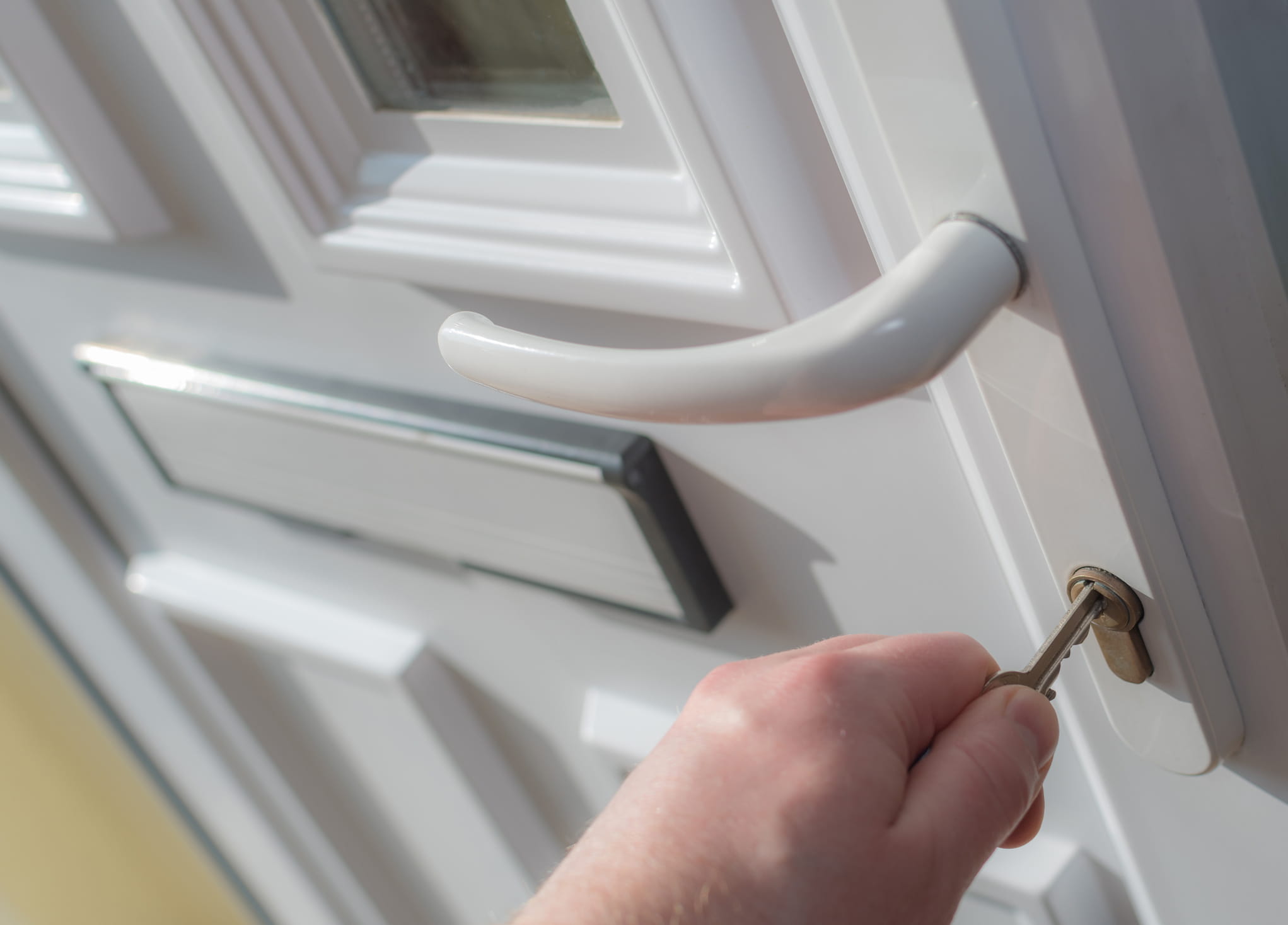
Why Won’t My Key Turn In My uPVC Door Lock?
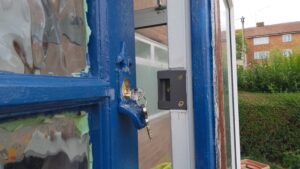
The key may stop turning because the cylinder is worn, the key itself is damaged, or the locking mechanism has not fully moved into position. Dirt inside the cylinder or pressure from a misaligned door can also prevent the key from rotating properly.
Avoid excessive pressure, as the key could snap inside the lock. Try a spare key if one is available, although repeated problems usually mean the lock needs professional attention. A locksmith can determine whether the cylinder needs replacing or whether the issue lies deeper within the multipoint mechanism.
Why Does My uPVC Door Only Lock When I Lift It?
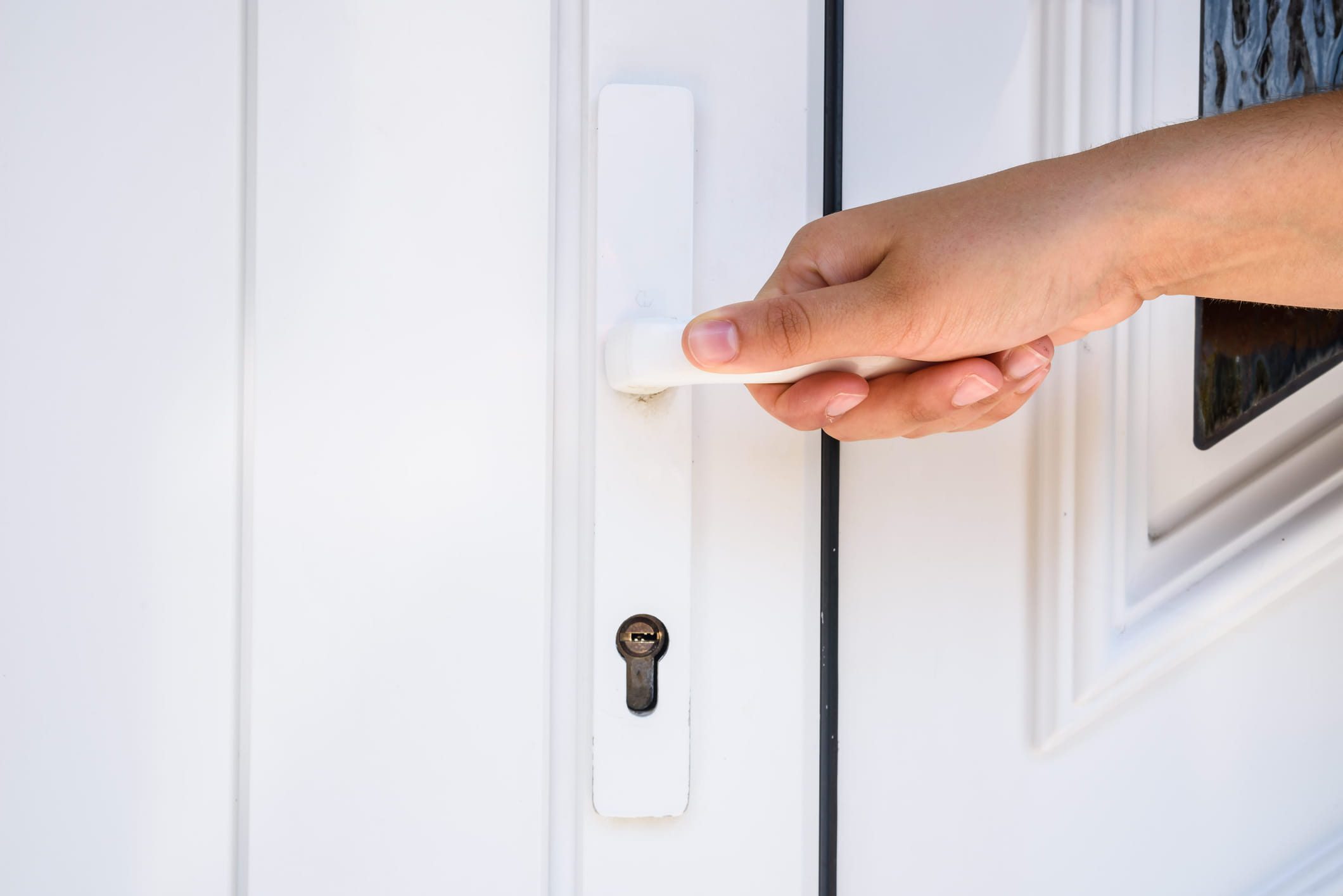
Most uPVC doors require the handle to be lifted before the key can secure the lock. This movement engages the hooks, rollers and bolts at several points along the door. However, if you need to lift the door itself or pull hard on the handle, the locking points may not be properly aligned.
This commonly happens when the door has dropped, or the keeps have moved. The door may still lock temporarily, although the additional pressure can wear out the gearbox. Correcting the alignment can make the door easier to operate and reduce the risk of sudden failure.
Why Does My uPVC Door Lock When Open But Not When Closed?
If the mechanism works normally while the door is open, the lock itself may still be functioning. The problem is more likely caused by bolts, hooks, or rollers failing to enter the keeps when the door closes.
The door may have dropped, the frame may have shifted or one of the keeps may have become loose. A locksmith can test each locking point and make suitable adjustments. Addressing the issue promptly can help prevent gearbox damage and restore a secure fit between the door and frame.
For uPVC Door Issues, Contact Gosforth Locksmith Service Today
A uPVC door that is stiff, unreliable or difficult to lock should be inspected before it fails completely. Gosforth Locksmith Service provides uPVC door repairs and lock assistance throughout Wallsend. Contact the team today to arrange help and restore secure, reliable access to your property.